
Welcome to Billion Dollar Energy. I went from a farm town in Canada to a Silicon Valley insider and venture capitalist. I share secrets and insights to help you build wealth, legacy, and freedom.
Forwarded this email? Join 55,000+ other professionals every Wednesday.
Billion Dollar Energy is brought to you by:

As a special thank you to billion dollar energy subscribers, get three months of Wispr Flow free from me today!
If I asked you what is the most interesting thing happening in AI, what would you say? Maybe it’s the multiple trillion dollar IPO’s that are on the horizon. Or perhaps it’s something more philosophical, like the debate around AI consciousness and the technological singularity. Well, I’m here to tell you that the most interesting, least talked about topic in AI is actually…
…insurance!
There's one group of people whose entire job is putting a dollar figure on exactly how likely you are to get hurt. Nope, it’s not the economists or the pundits. Actuaries and underwriters, the ones who decide what a hurricane costs, what a plane crash costs, what a lawsuit costs, then write a number on a contract and stand behind it with their own balance sheet.
This year, that group looked at AI and, in large part, said no thanks. I’ve shared in the past about how the AI bubble could go south, but the insurance problem is the issue brewing under the surface.
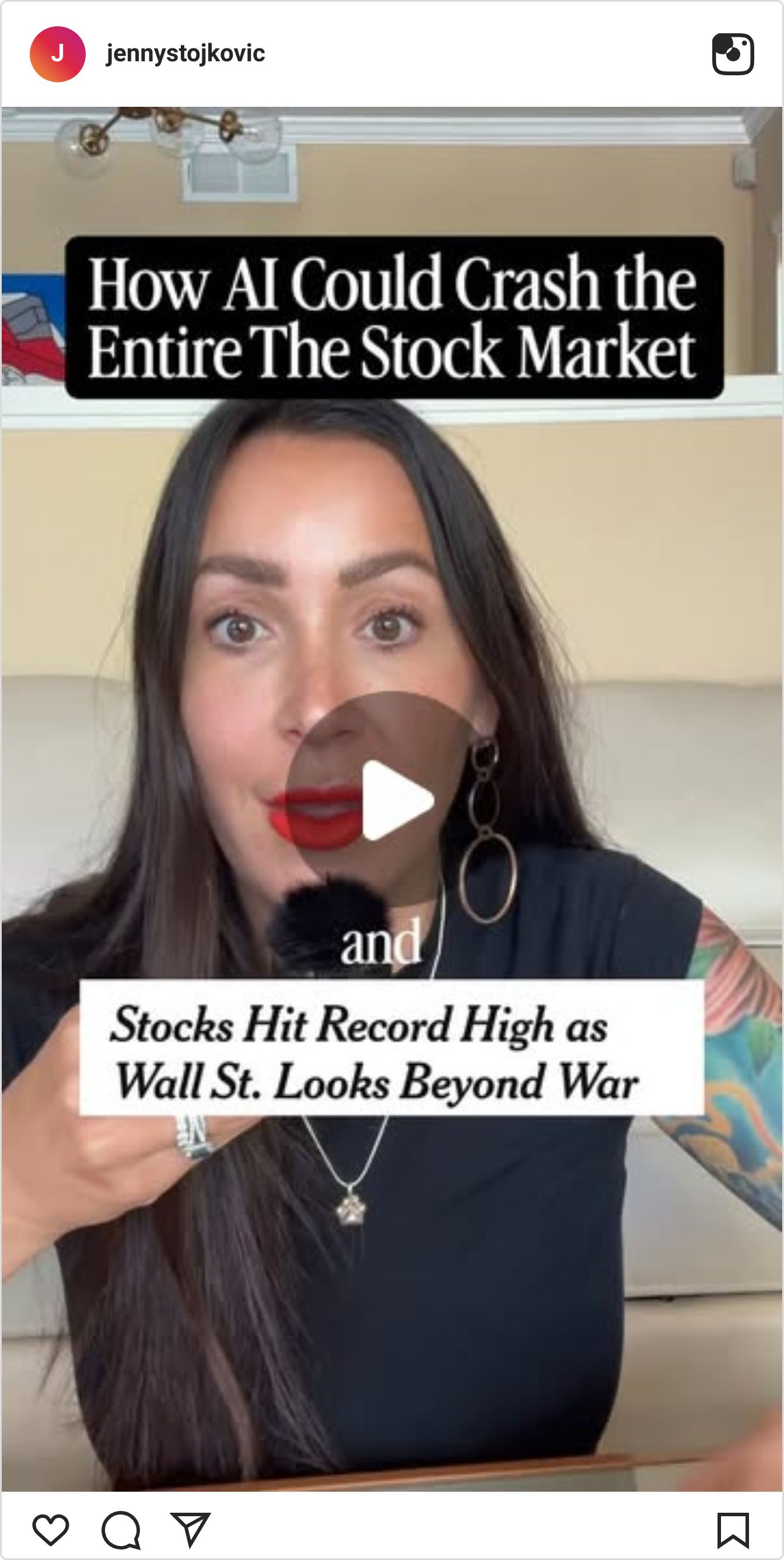
The exclusions arrived faster than almost anyone expected.
AIG, Chubb, Travelers, Berkshire Hathaway, WR Berkley, Great American, Hamilton, and Philadelphia Indemnity have all filed to strip AI-related claims out of standard commercial policies this year, covering general liability, D&O, and errors and omissions. More than 60 P&C insurance groups have filed AI exclusions in 2026, and state regulators have approved over 80% of those requests.
On January 1, 2026, Verisk's ISO rolled out standard endorsements, CG 40 47 and CG 40 48, that let any carrier using them exclude generative AI losses from a policy entirely. ISO forms underpin roughly 82% of US commercial property and casualty policies, so this is a carve-out of the very plumbling of the AI industry.
WR Berkley went further than anyone, writing what it called an "absolute" AI exclusion that reaches all the way to claims against a company's own directors and officers. One attorney reviewing the broadest versions of this language put it bluntly: "given that everything... now uses AI, I don't know how anything would be left."
The insurers are saying the math doesn’t work.
For the last few years, AI risk sat inside policies that never mentioned AI at all, so it was covered by default. People in the industry call this "silent AI," and it's the same setup that blew up as "silent cyber" a decade ago, right before insurers spent years and billions closing that gap. They're closing this one on a much faster clock.
The deeper problem is that insurance depends on losses being independent. A hurricane hits Florida, not Ohio. A factory fire doesn't spread to every factory using the same equipment. AI breaks that assumption at the root: thousands of companies run the exact same handful of foundation models, so one flaw, a hallucination, a poisoned dataset, a jailbreak, could trigger losses across every customer of that model at once. Put simply, it’s a single point of failure.
Chubb has been the most explicit about this. It will underwrite AI, but it specifically carves out "widespread" incidents, meaning one model failure that hits many clients simultaneously.
Translation: they'll cover the boring stuff. The systemic stuff, the exact scenario everyone building on the same three or four frontier models is exposed to, is the part they won't touch.
The lawsuits are already here, and they’re compounding fast.
Generative AI lawsuits in the US surged 978% from 2021 to 2025, according to a Gallagher Re report. That includes Reddit v. Anthropic, over the use of scraped data for training, and Raine v. OpenAI, involving claims of real-world harm. Meanwhile, every major AI vendor's own contract terms cap their liability at roughly 12 months of fees paid, with no coverage for consequential damages.
Put those two facts together and you get the actual mechanism here: the liability doesn't disappear. It just slides down the chain, from the model builder, to the enterprise that deployed it, who now often can't insure it either.
There’s a part of this story that shouldn’t be funny, but I can’t help but laugh. The same insurers excluding AI liability from their own products are racing to deploy AI internally to underwrite, price, and settle claims faster. Chubb's leadership has argued publicly that AI will reshape how insurance itself gets sold and serviced, while Chubb simultaneously writes AI out of the products it sells everyone else. They believe in the tool enough to run their own company on it. They don't believe in it enough to stand behind yours.
To be fair, the gap isn’t staying empty.
Munich Re, along with newer entrants like Corgi, Armilla, Mayflower Specialty, and Embroker, are already selling standalone AI liability policies, with limits from $2 million to $50 million and premiums that scale with how much scrutiny you'll accept on your own AI use. This is roughly the same path cyber insurance took a decade ago: broad exclusion first, specialty market second, eventual normalization third.
But that market is small, new, and still doesn't touch the systemic scenario Chubb carved out. The specialty players can price one company's AI mistake. Nobody's pricing what happens when the mistake is the same one, at the same time, across every company that leaned on the same model.
This is the AI bubble story that’s not reflected in the stock market.
Michael Burry spent his August 13th letter walking through the circular financing web holding this boom up: Nvidia funds OpenAI, which buys Nvidia chips through Oracle and CoreWeave, in which Nvidia also holds equity. Five hyperscalers are carrying a combined $1.65 trillion in off-balance-sheet debt. That's the case for why the AI trade might be overextended, and plenty of smart people are already arguing both sides of it.
I find the insurance story more convincing than any of that, because actuaries don't get to be optimistic. A hedge fund manager can be early or wrong for years and still be in business. An insurer that mis-prices a systemic risk goes under, and the whole industry remembers the name for a generation. Railway mania bankrupted a wave of 19th-century underwriters who wrote coverage on infrastructure that never generated the returns anyone promised. The telecom crash of the early 2000s spent years re-pricing D&O and professional indemnity coverage after the losses landed. Insurance is the industry that has to be right about a bubble, because being wrong is existential for them specifically.
So when that industry looks at AI and says "we'll cover the ordinary version of this, but not the version where it goes wrong everywhere at once," that's the closest thing to an honest price check the AI boom has gotten all year. The risk hasn't gone away because nobody wants to underwrite it. It's just sitting unpriced on the balance sheets of everyone who assumed it was already covered, waiting for the first correlated incident to prove the actuaries right.
The smartest read on a bubble was never going to come from the people selling it. It was going to come from the people who have to pay when they're wrong.
Hit reply and tell me: does this change how you think about the AI story, or are the exclusions just insurers being insurers? I read every single response.
Jenny
P.S. If your business runs on an AI vendor's tools, go check what your own liability policy actually says about it. There's a decent chance the language changed this year and nobody told you.

Shared this email? Subscribe here.