
Welcome to Billion Dollar Energy. I went from a farm town in Canada to a Silicon Valley insider and venture capitalist. I share secrets and insights to help you build wealth, legacy, and freedom.
Forwarded this email? Join 55,000+ other professionals every Wednesday.
Billion Dollar Energy is brought to you by:

As a special thank you to billion dollar energy subscribers, get three months of Wispr Flow free from me today!
I met Pav when I was 21. A few months later, we ran off to a courthouse and got married. Like any great love story, ours starts with the classic trifecta: young, dumb, and broke.
We realized quickly that things were not going to be easy, so we thrust ourselves headfirst into our careers. Brick by brick, we spent our twenties trying to make something of ourselves. It wasn't until I turned 30 that we started talking seriously about having a baby.
Of all the things I expected to face in life, infertility was never one of them.
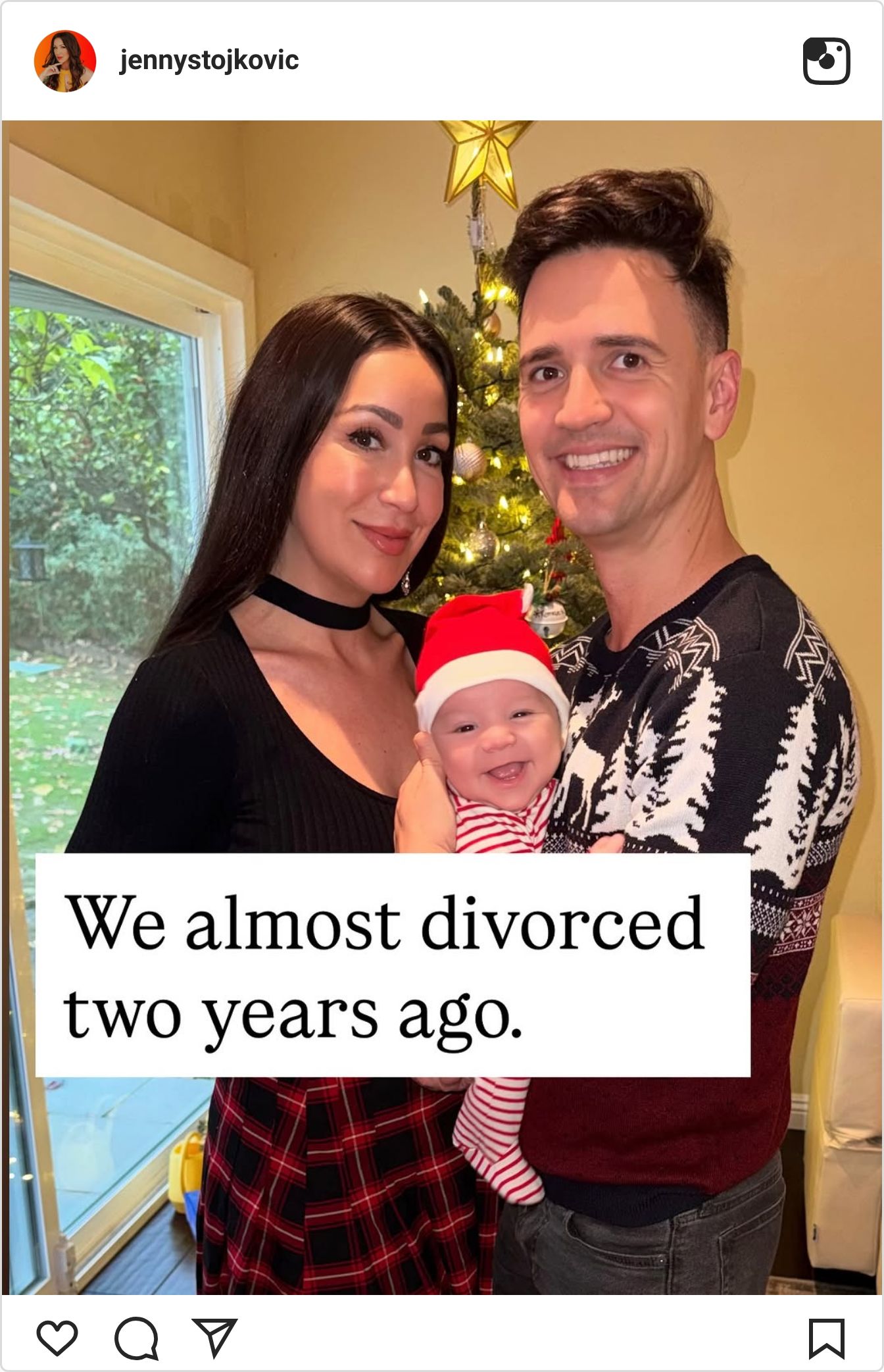
I'd used at-home fertility tests for years just to check in on my own numbers, and every result came back clean. But when months of trying turned into nothing, I assumed the problem was mine.
We booked an appointment. The doctor looked at me first and said I was fine. Then he looked at Pav. This is where our story starts.
I'd spent years assuming infertility was a woman's problem. It turns out a genetic condition Pav was born with causes male infertility just as often, and almost nobody talks about it. Surgery didn't fix it, so we moved to IVF.
Our first clinic, one of the best-known names in the country, treated us like inventory. I was overmedicated. The care was sterile and cold. When I asked what could be done for Pav's numbers, I was told flatly: there was no possible way to improve male fertility.
Our results were bad, and the dream of a big family started disappearing in real time.
The Yellowstone trip.
That was the summer our dog died, and I couldn't be in our house. Pav took me on a road trip with no real plan. We'd just left Yellowstone and pulled over to look at some bison when Pav saw a father with his sons nearby. It sent him into a spiral.
It turned into days of fighting. We looked at each other on that trip and genuinely didn't know if we'd make it to the end of the year. Like a quiet thief in your dreams, infertility almost destroyed us.
When we got back, we had a second opinion scheduled. We nearly canceled it, but went anyway. That doctor told us plainly we hadn't been properly treated, and that there were real ways to fix this. For the first time in years, we had hope.
The next round of IVF was a massive success. Altogether, we ended up freezing half a dozen embryos, transferred the first one, and had our son, Roman.
After Roman was born, I started talking about what we'd gone through more openly. The response caught me off guard.
Friends I'd known for years told me quietly they'd lived some version of the same story. Women I only knew from Instagram messaged me about their IVF nightmares. Many waited longer than they expected while investing in their careers, only to find out their biological windows had closed. Nearly every couple had their own version of Yellowstone.
I went from feeling like the only person this had ever happened to, to realizing we were part of something enormous. One in six couples worldwide face infertility.
Soon, Pav began sharing his experience, too. He told the Wall Street Journal he kept seeing the same pattern of men who knew something might be wrong and clinics not prioritizing it. That's what pushed him to go on the record himself and tell other men flatly: "Get a semen analysis done. Get results."
That realization is what sent me looking for answers beyond our own experience. Here's what I found.
The IVF market, by the numbers.
The global IVF market is running somewhere between $24 billion and $35 billion in 2026, growing by 12% annually. In 2024, the most recent full year of data, more than 100,000 babies were born via IVF in the US for the first time ever, across nearly 450,000 treatment cycles. IVF now accounts for almost 3% of all US births, up from 2.1% in 2019.
One in roughly every 36 babies born in America right now started in a lab. Roman is one of them.
Private equity is eating IVF for dinner.
Private equity-affiliated clinics performed 52% of all US IVF cycles in 2022, up from 4% in 2013. KKR closed its roughly $3.25 billion acquisition of IVIRMA, one of the world's largest fertility platforms, folding dozens of independent clinics under one owner.
US Fertility now runs Shady Grove Fertility, IVF Florida, RSC of the Bay Area, and FCI Chicago as a single network. Inception, Prelude, Pinnacle, and CCRM/Unified round out the platform layer, with Kindbody positioning itself as the tech-forward hybrid.
It's the same consolidation logic private equity has run on veterinary, dermatology, and dental practices for a decade: buy up fragmented, high-margin, recurring-need practices, standardize the back office, and raise prices where demand is inelastic. IVF just attracted that money later, because it was smaller and less understood. That's clearly over now.
Our first clinic, the one that told us flatly there was no way to improve male fertility, fits this pattern exactly. We were a number moving through a system, not a couple that they were actually trying to help.
What patients pay vs. what a cycle costs to run.
A single IVF cycle in the US averages $23,474 in 2026. A bare cycle runs $12,000 to $18,000, with medications adding another $3,000 to $8,000. Most patients need two to three cycles to get a live birth, which puts total out-of-pocket spend around $50,000 for an average family.
Location swings the number hard: Texas, Florida, and Tennessee run $12,000 to $18,000 a cycle, while California, New York, and Massachusetts run $20,000 to $30,000 or more for the identical procedure.
Twenty-five states plus DC now mandate some form of fertility insurance coverage. That means the other half of the country is paying entirely in cash for a medical procedure with a roughly 30% success rate per cycle. We were one of them.
The rich are embryo-maxxing.
In July 2026, Alife Health's Embryo Predict became the first FDA-cleared AI system for embryo assessment, following a 440-patient randomized trial across seven clinics, deployed with First Fertility. Fairtility's CHLOE EQ, AIVF, and Presagen's LifeWhisperer run similar computer-vision models on incubator footage, replacing embryologists' visual grading and trained intuition with an algorithm score.
Genetic screening has gone further. You'll remember Malcolm and Simone Collins from last week's billionaire baby boom newsletter: what I didn't tell you is they used polygenic screening to choose one of their daughters, picking the embryo with the best modeled odds against heart disease, cancer, diabetes, and schizophrenia. That's now a commercial category, designer babies.
Nucleus Genomics ranks embryos against up to 900 genetic conditions plus traits like IQ, height, and projected longevity. Orchid Health screens whole genomes for cancer, Alzheimer's, schizophrenia, and obesity risk. Heliospect Genomics reportedly charges up to $50,000 to screen 100 embryos for predicted intelligence and behavior.
Geneticists caution that these scores are weak predictors for individual traits, especially outside European-ancestry populations, and can sell false certainty. That hasn't slowed adoption among buyers who can afford it. Embryo selection used to mean avoiding one known disease in the family. But now it is about optimizing a portfolio of embryos, the way you'd optimize anything else you're allowed to rank and choose from.
I don't know where I land on this.
Some people call this eugenics, and it's hard to argue otherwise: ranking embryos by predicted disease risk, IQ, or height is the same logic that decided who got to exist a century ago.
I can't fully condemn it, though, because a version of this technology (the scoring that improved our odds of picking the right embryo) is the reason Roman exists. Roman was a near-perfect embryo, which we compared on a scoreboard with other embryos. Like any desperate couple, we wanted every tool available to us in that room.
But I can't forget that my dad is blind. Any of these exact technologies would have screened him out before he was ever born. In fact, we actively used these technologies to screen for any potential genetic issues that could affect our future children's vision, too.

And yet, my dad built a full life anyway.
I don't know how to hold both of those things at once: wanting the best chance for my own kid, and knowing the same technology would have written my father off before he had a chance. If this had existed all those years ago, then I wouldn't be here writing to you today.
There are no answers to questions like these. Infertility is a long, difficult road that I hope you never walk. But if you do, just remember that you are not alone.
Hit reply and tell me: do you think we're crossing a line with designer babies? I read every response.
Jenny
P.S. If you or someone you love is in the middle of this right now, I see you. It does get better, even on the day it feels like it never will.

Shared this email? Subscribe here.