
Sponsored by

Welcome to Billion Dollar Energy. I went from a farm town in Canada to a Silicon Valley insider and venture capitalist. I share secrets and insights to help you build wealth, legacy, and freedom.
Forwarded this email? Join 45,000+ other professionals every Wednesday.
Billion Dollar Energy is brought to you by:
Replace your first 4 hires with AI. Free workshop on April 8th.

Most early-stage founders can't afford their first four hires. Sales, marketing, dev, and support alone can run hundreds of thousands in salaries.
On April 8th, AI thought leader Heather Murray shows pre-seed and seed founders how to build all four functions using AI tools. Live, with demos, for free.
Register today and get a free AI tech stack worth $5K+ including Claude, AWS credits, Make, and 90% off HubSpot.
Subscribe to my NEW YouTube Channel!
Got a busy schedule? I’m taking my popular billion dollar energy series to Youtube every week. Now you can listen to my full deep dive every week in the car, watch at the gym, and send it to friends!
Book a time to speak with me 1:1.
Interested in coaching on venture capital, running your businesses, public speaking, or growing your network? Book a time for us to connect.
I watched Superbad this weekend, and I haven't been able to stop thinking about it since.
If you haven't seen it, or haven't seen it in a while, the movie came out in 2007. Jonah Hill and Michael Cera play high schoolers trying to buy alcohol for a party. It's dumb and vulgar and one of the funniest movies of my generation.
I was 16 when it came out, close to the same age as the characters. In small town Canada, we were obsessed. Some classmates stole the cardboard cutout from the local cinema, and we passed it around to pull pranks on each other for months. One time, I covered my friend's car in shaving cream, and to get back at me, he and his buddies packed my tires in snow and buried the whole thing.
We thought we were the funniest people alive (as evidenced below with a photo I’d only share with you, my newsletter fam).

Jenny doing some sort of high school prank at 16
That friend — I'll call him Mike — I texted him this weekend for the first time in years.
We started in the exact same place: same town, same school (the only school), same dreams, same starting line. We're both 35 now, and our lives look nothing alike.
Mike wrote the book.
When we were teenagers, Mike talked about becoming a writer, and not in a vague "maybe someday" way. He built an entire fantasy world from scratch with its own mythology, its own history, its own characters. He had a full YA series planned out, and he would stay up working on it while the rest of us were out doing nothing.
After high school, he actually did it. He went and got his Master's degree, far more schooling than I ever had, and he wrote the novel. A real one. He finished it, revised it, and sent it to literary agents. He was rejected over 100 times. Most people quit after ten rejections, but Mike kept going to a hundred.
And then he stopped.
When I reached out this weekend, I learned where he is now. He's working a middle management job he hates, his old car is falling apart, he's in the middle of a divorce, he's been struggling with depression, and he drinks too much.
Mike bet on himself. He did everything right — built the world, wrote the book, got the fancy degree, sent the letters. He did the brave thing everyone says you're supposed to do, and it didn't work out.
I don't know why my path worked and his didn't.
I'm not writing this to say I figured it out and Mike didn't. Life is more complicated than that.
We started at the same place, and now I'm a venture capitalist in California with a husband, a son, and work I love, while he's going through the hardest stretch of his life. He has more education than me. He worked harder on his craft than I ever worked on anything at that age. Was it choices? Was it luck? Was it timing? I think it was all three.
I was the first generation in my family to graduate high school, let alone college. The only one who ever moved to America. Many of my classmates ended up as bartenders or cashiers. Some landed jobs at the Honda plant, which was considered a real win, and a few became teachers. Like me, Mike was one of the ones who tried to get out.
The life I live now is so far from where I started that sometimes it doesn't feel real. I walk through the Hollywood Hills and think about how I used to scrape ice off my windshield in a town you'll never hear of. The distance is so vast it forces me to ask: why me and not Mike?
Six things I think I got right by 35.
These aren't guarantees, and they're not a formula. Mike did some of these, too, and it didn't save him. But when I look back at the last two decades, these are the choices I think compounded in my favor.
1. I moved to where the opportunity was.
My first big leap was getting an apartment at 17 (yes, really), so I could move to the city for college. Then, I took an even bigger leap when I moved to America. I moved to Silicon Valley without connections or a safety net or a backup plan. But I understood that geography matters — not because where I was from was bad, but because proximity to certain industries and certain people changes what's possible. Mike stayed, and I don't think staying was wrong, but it was a different bet.
2. I bet on myself before I felt ready.
I've told this story before: at 17, I cold-emailed a billionaire and asked him to fund my education with no reason to think it would work, and it did. That pattern repeated throughout my twenties, whether it was applying for jobs I wasn't qualified for, asking for meetings I had no business requesting, saying yes to opportunities that terrified me.
The theme wasn't confidence so much as a question I kept asking myself: why not me?
3. I got boring with money early.
When Pav and I got married in our early twenties, we were both in debt. He became obsessed with tracking every dollar, and we didn't do the lifestyle creep or upgrade the apartment every time we got a raise. We invested when it felt pointless.
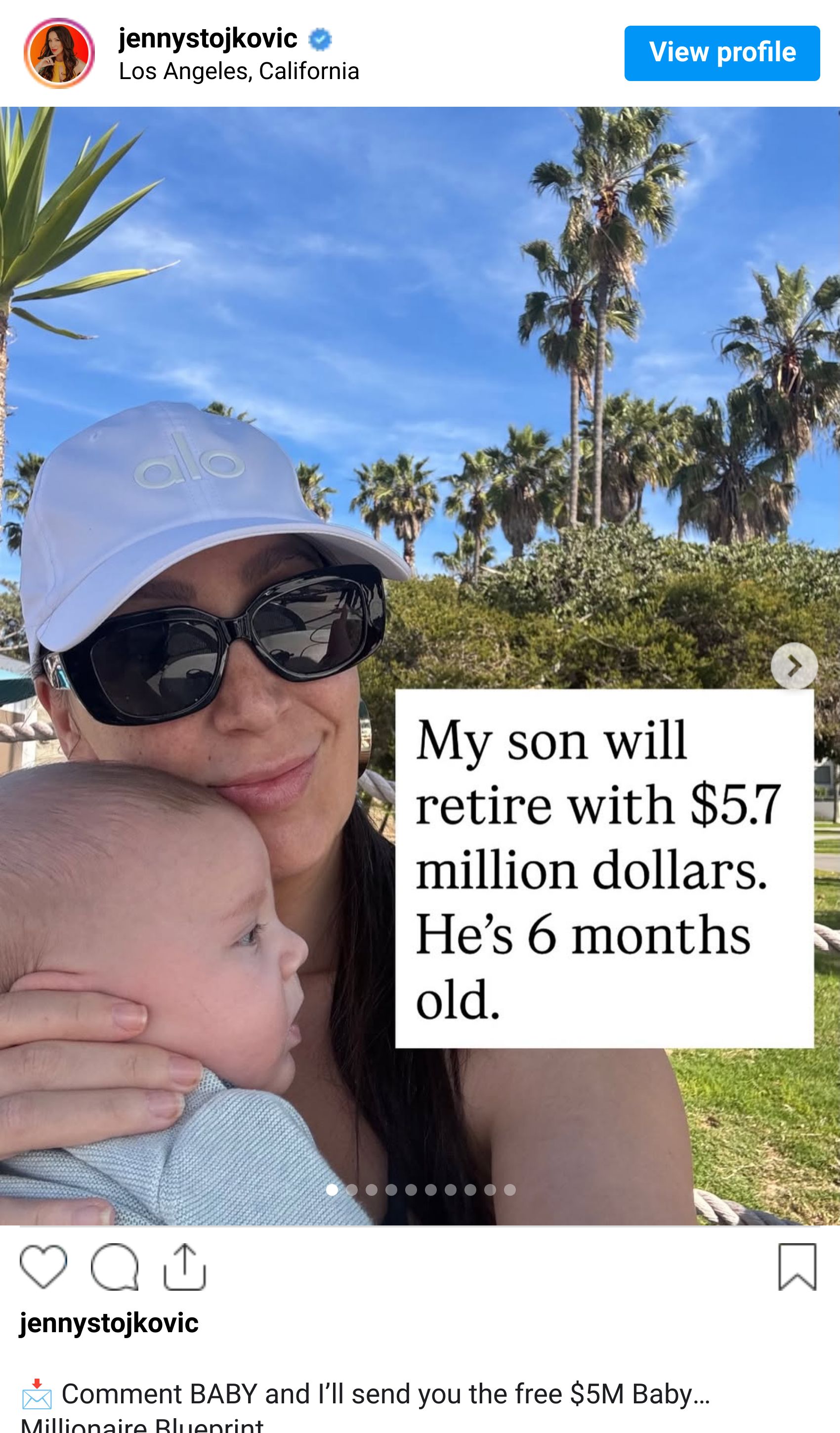
That early discipline is the reason I made my first million before 30 – not through a windfall, but through saving each penny. Now we have options today, not because we made the most money, but because we kept the most. Today, I’m building wealth for my son in a way that was never possible for me.
4. I built relationships, not a network.
My old boss was worth $12 billion and always made sure to reach out to his friends and peers to congratulate each win and support every loss (this was part of LBJ’s formula for success, too). Ultimately, the people who shape your career aren't the ones you meet at conferences but the ones you keep showing up for over a decade.
Just last week, a friend of mine who is a famous television star got laid off, so I sat down with her for lunch to help her negotiate her severance. Meanwhile, another friend — whose daughter is one of the biggest pop stars in the world — just landed her own new show, so I called to say congratulations.
I wanted nothing from either. By this age, your network is really just the people who still pick up the phone.
5. I married the right person. Early.
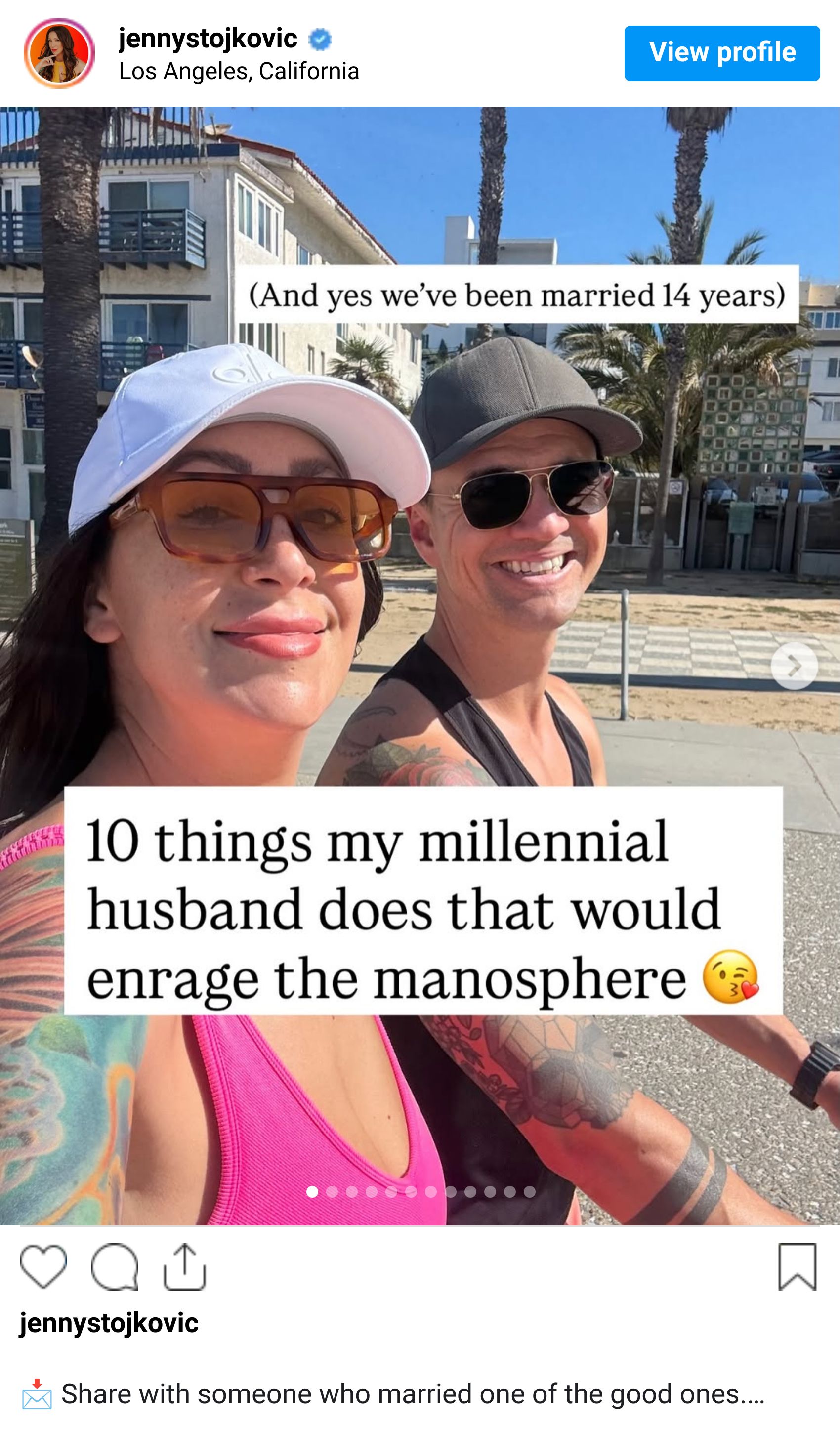
This one is luck as much as choice. Pav has been my partner in everything — parenting, money, career decisions, hard conversations — and I don't know where I'd be without him, but I know it wouldn't be here.
Jay Zagorsky's landmark study found that married people's wealth increases about 16% for every year of marriage, and Census Bureau data shows that married couples under 35 have nearly ten times the net worth of their unmarried peers. Not everyone finds that person, and I try not to take it for granted that I did.
6. I kept my identity bigger than my job.
I've had seasons where work consumed everything, but I always had something else — writing, community, curiosity outside my lane — something that didn't care about my title or my metrics. When work is your whole identity, every setback becomes an existential crisis, and the people who survive the long game have something to come home to.
I keep asking myself uncomfortable questions.
If I had been rejected 100 times, would I have kept going, or would I have cracked too? If my marriage had fallen apart, if my bets hadn't paid off, if I had stayed back home… would I have ended up in the same place Mike is now?
I don't know, and that uncertainty keeps me humble.
The scoreboard at 35 is real, but so is the randomness. Luck is a bigger variable than anyone who's winning wants to admit. If you're under 35, your choices are compounding right now. If you're past 35, the game isn't over. And if someone in your life is going through it, reach out. You don't need a reason.
So, what happened to Mike?
I caught up with Mike two years ago when he visited California with his family. He came to lunch alone because he was fighting with his wife. I showed him around Mulholland Drive, took him to my favorite spots, and dropped him off at his hotel. When we said goodbye, he burst into tears. He told me he wished he had made it like me and that he was proud of me for getting out.
I think about that moment all the time.
I texted him this weekend because I watched a dumb movie from 2007 and remembered covering his car in shaving cream. I don't know if I can help him. But I wanted him to know I still think about who we were back then, and that I'm still proud of him too. For the book, for the hundred rejections, for trying at all.
The next chapter isn't written yet. Not for him, not for you, not for any of us.
What's your "Superbad moment," the memory that takes you back to before everything diverged? And what do you think you got right? Hit reply and tell me. I read every response.
Jenny
P.S. If this one resonated, forward it to someone who needs to hear it, whether they're winning right now or just trying to get through.

Shared this email? Subscribe here.