
In partnership with

Welcome to Billion Dollar Energy. I went from a farm town in Canada to a Silicon Valley insider and venture capitalist. I share secrets and insights to help you build wealth, legacy, and freedom.
Forwarded this email? Join 50,000+ other professionals every Wednesday.
Billion Dollar Energy is brought to you by:
They texted. They DM'd. They moved on.

Over 3.5 billion people open WhatsApp, Instagram, or Facebook Messenger every day. Your customers are already there, asking questions and deciding who to buy from.
Wati puts your business across WhatsApp, Instagram DM, Facebook Messenger, SMS, RCS, and web chat in one AI-powered inbox.
Automations respond instantly, track every conversation, and ensure nothing gets missed.
Meet customers where they already are, before your competitor does.
Meet your customers where they already are. Before your competitor does.
Book a time to speak with me 1:1
Interested in coaching on venture capital, running your businesses, public speaking, or growing your network? Book a time for us to connect.
I just got back from Cannes Lions.
Boy, do I have a lot to share.
On my flight over, I sat next to a major YouTuber. I overheard him tell his team that their new AI production setup took them from 5 people to 1.
Then, a few nights later, I was getting into an elevator with my friend to head to a private party. Oprah Winfrey stepped into the same elevator, heading to the same place. We ended up walking together. She held our hands. She patted our wrists like a mother would.
Two moments, one week. Only in Cannes.
AI is making teams smaller. Fast.
The five-person-to-one story is not an outlier. Lean media companies, teams of one to three people, are now producing the output volume of a traditional 20-person agency. Adobe's 2026 survey of content professionals found 75% report AI has increased their organization's output, with 30% calling the increase significant.
Production cost is no longer the bottleneck. The work that used to require a crew now requires a person who knows what to ask for.
But here is the part most people skip past.
Audiences are pulling away from AI content at the exact same time.
Only 26% of US and UK consumers now say they prefer AI-generated content, down from 60% in 2023. Supply of AI content is exploding. Appetite for it is shrinking.
That gap is where the money goes. If a one-person team can now produce what twenty people used to, the scarce asset is no longer production capacity. It is the thing AI cannot manufacture: a real person, in a real room, who people choose to trust.
Marketing can rebrand anything. Including the past.
At Cannes, I watched brands spend serious money making old, even controversial, products feel rebellious again. Marketing does not just sell what is new. It can resell what is old and make it feel inevitable.
On my first night, I spent the evening with a major entertainment CEO, who heads up a budget of more than $20 billion dollars. His strategy? Sell consumers what they used to love, but with a 2026 strategy. Translation: they’re about to spend billions licensing every show and movie of your youth, then reformatting it into a vertical screen.
The data backs this up everywhere I look. Library content — shows and movies that already exist — is now outpacing brand-new originals by more than 3 to 1 on major streaming platforms. Tubi's 2026 viewer survey found 97% of viewers are interested in content released more than ten years ago, and 79% said they specifically want platforms to remind them of what they used to love instead of pushing something new.
Nostalgia is not a soft, sentimental trend right now. It is the highest-performing content strategy in the industry, and it works because it is cheaper to remind someone of a feeling they already trust than to manufacture a new one from nothing.
The most valuable room of the week had a guest list you could not buy your way onto.
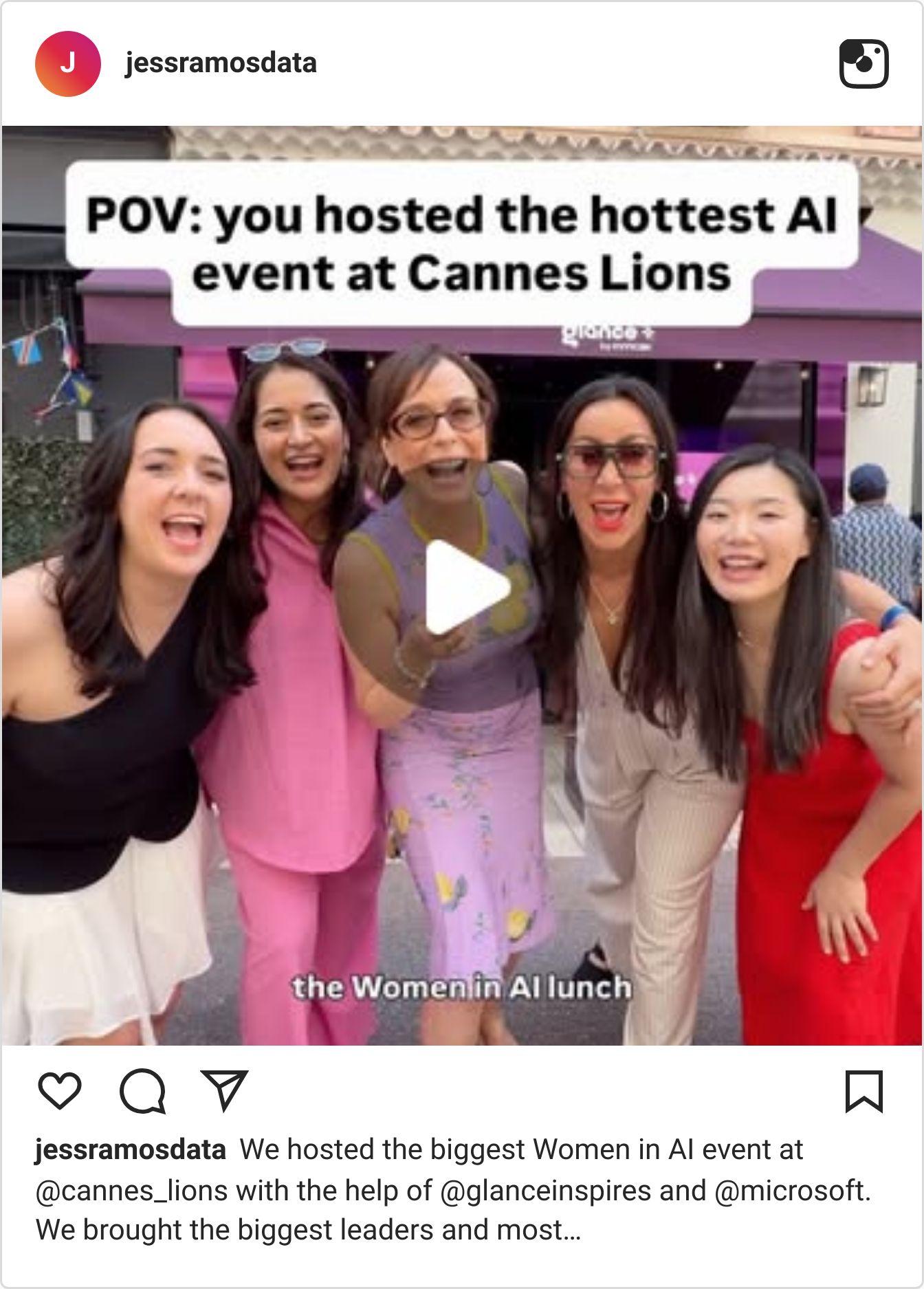
I hosted a Women in AI event with Microsoft and Glance. Max capacity, a line out the door, in 90 degree heat. The most powerful tool in the building was air conditioning and a seated dinner. The people in that room are the reason it worked, not the venue.
I also met a CEO running a $20 billion company who has never posted on LinkedIn. 87 followers. Private Instagram. The people at the very top are flexing by being unreachable, not by being everywhere.
I asked dozens of media and tech executives this week whether college was worth it in 2026. The financial case still technically holds: a college degree returns about 12.5% according to the Federal Reserve Bank of New York, and graduates earn roughly $30,000 a year more on average. But almost every executive gave me the same answer when I pushed past the stats. The degree itself matters less than who you sat next to for four years.
The pattern underneath all of it: the right group chat is worth more than an MBA, and you cannot buy a ticket into it. The best rooms do not have a door you can find on your own. They are found through relationships you built long before you needed them.
Stop competing on production volume. If a one-person team can now out-produce a twenty-person agency, volume was never your moat. Your point of view was. Spend the time AI just gave you back on saying something only you would say.
Mine what already exists before you build something new. Before you greenlight the new idea, ask whether an older one, a past campaign, an old product, a story people already trust, could be resurfaced instead. The audience data says they would rather feel something familiar than evaluate something unproven.
Treat in-person presence as a skill, not a bonus. Some of the most charismatic people I follow online went quiet the moment they walked into a room. With AI content flooding every feed, commanding a room in person is becoming the rarer skill — not the redundant one. Practice it deliberately. Take the speaking slot. Go to the dinner. Be the person who is good in the room, because fewer people are.
Build the room before you need it. The CEO with 87 followers did not get invited to anything by being loud online. Find the three to five people in your industry whose judgment you trust, and invest in that relationship for a year before you ever ask them for anything.
Pick your network over your prestige. If you are choosing between a more famous school or company and a smaller one with people you would actually want in your corner for a decade, take the people.
If your product looks like everyone else's, your brand is the only thing left. At Cannes, I watched startups collapse into each other. Same features and same pricing tiers. When every company offers everything, the only thing that separates winners is whether people feel something about the name. Brand is not a logo. It is the shorthand people use when they do not have time to evaluate you from scratch. Build one.
Pay attention to where the world's voices are actually coming from. The people who commanded rooms at Cannes were not predominantly American. They were Nigerian, Brazilian, South Korean, Indian. If your content, your hiring or your strategy assumes American culture sets the default, you are working with an outdated map. The creators, founders, and executives driving the next decade of global culture are already building. Most US brands have not noticed yet.
Position now, not when it is obvious. The AI economy will make this industry unrecognizable in five years. The people who will benefit from that are not the ones who react to it. They are the ones who moved before the shift was legible to everyone else. Look at what is happening in the rooms most people cannot get into. That is where the next five years are being decided.
Read my full breakdown here:
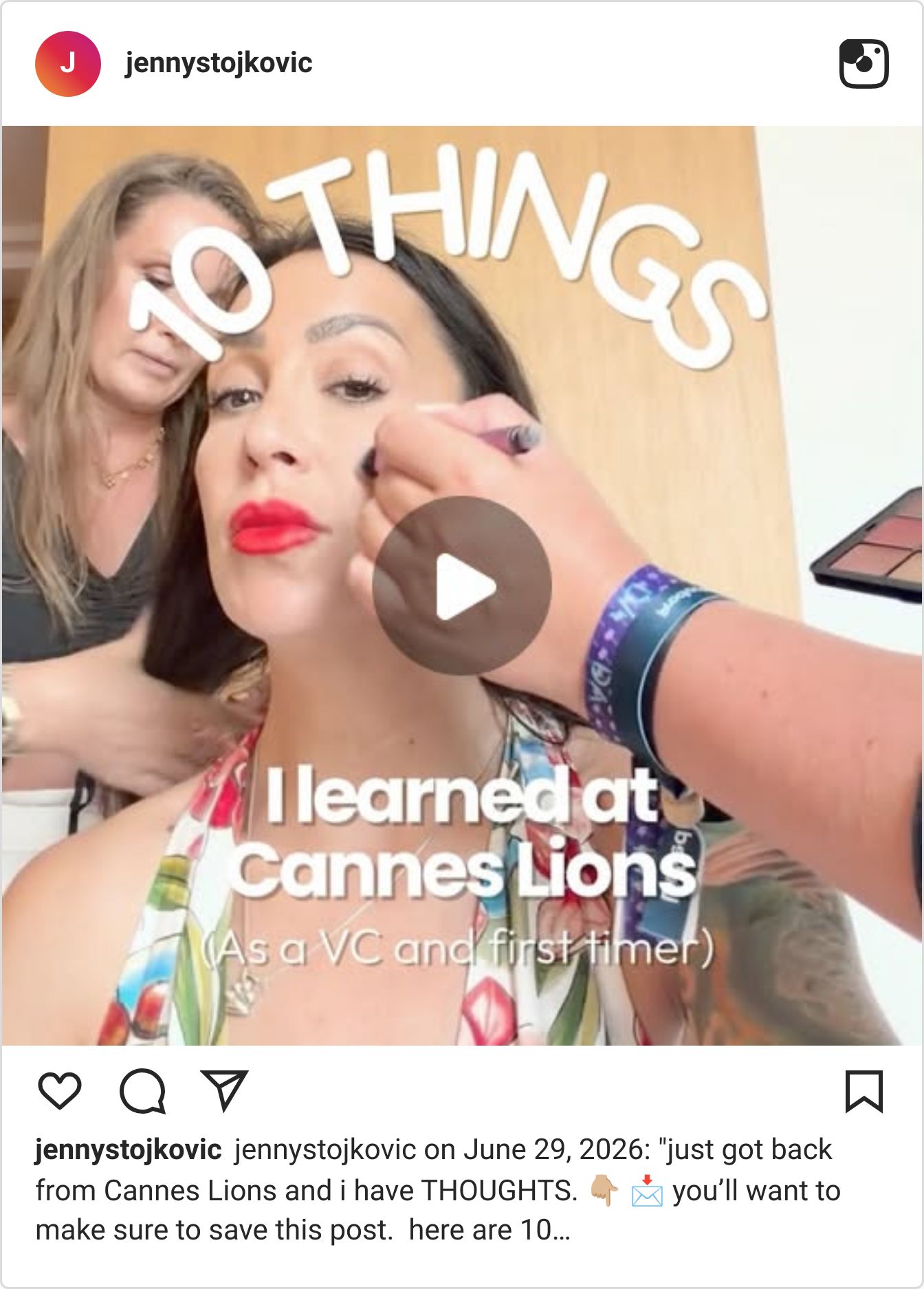
The future does not announce itself. It shows up in rooms most people never get into.
Hit reply and tell me: which of these surprised you most? I read every single response.
Jenny
P.S. If someone in your life is heading into a big industry event this year, send them this before they go.
P.P.S. Happy Canada Day, fellow Canucks. :)

Shared this email? Subscribe here.