
Welcome to Billion Dollar Energy. I went from a farm town in Canada to a Silicon Valley insider and venture capitalist. I share secrets and insights to help you build wealth, legacy, and freedom.
Forwarded this email? Join 55,000+ other professionals every Wednesday.
Billion Dollar Energy is brought to you by:

As a special thank you to billion dollar energy subscribers, get three months of Wispr Flow free from me today!
Last week, I sat at a retreat outside Los Angeles getting a walkthrough of ChatGPT’s newest tools from OpenAI’s team. Days earlier, the New York version of the event was ripping through my feed for a different reason: influencers getting cancelled widely for glamping in $1,000-a-night cabins while the company pursued a $500 billion data center build in Ohio.
Yes. Even your mom heard about it.
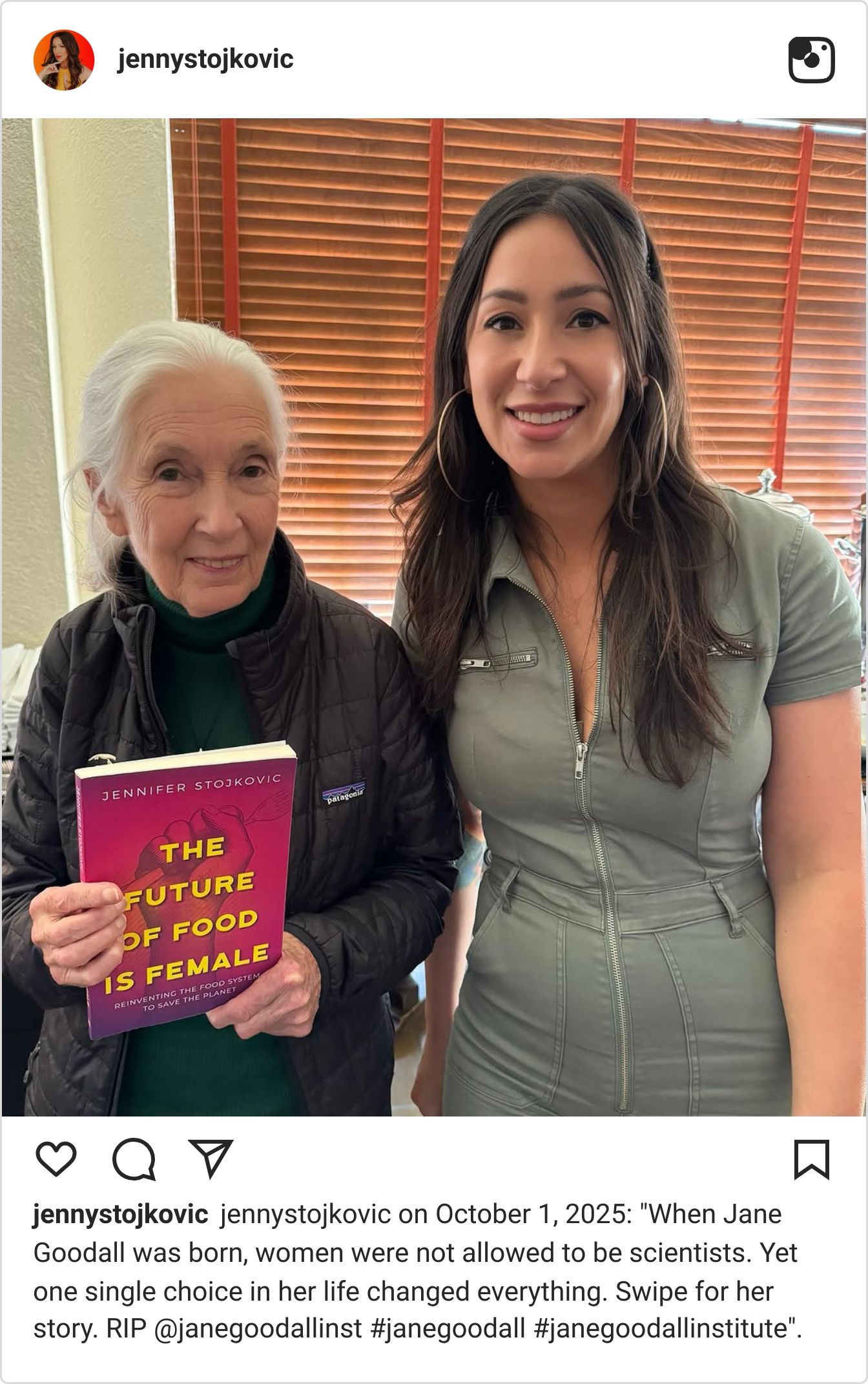
Before I explain why, here’s who’s telling you this: I spent years as a government lobbyist for the tech industry, including representing OpenAI’s CEO Sam Altman, and sitting across from communities dealing with the side effects of the companies I represented. Later, I launched a climate VC fund, wrote a bestselling book on climate innovation, and advised on major environmental films, like Richard Branson’s Eating Our Way to Extinction. I’ve even been blessed to work directly with climate heroes like Jane Goodall herself, who was a big fan of my book.
To put it bluntly, my expertise is the exact Venn diagram of this topic: politics, climate, and AI.
I’m not new to this fight, and I’m not on any team. So let’s get into it.
OpenAI’s first creator retreat put influencers in private cabins at Wildflower Farms in New York’s Hudson Valley for more than $1,000 a night. The event, dubbed “Summer Camp,” included beekeeping and farm-to-table dinners. Fortune called the fallout a “comms disaster.” TechCrunch and The Cool Down called it “greenwashing.”
Most people didn’t even know the second event I was at happened. Our time together was substantive and focused on AI business tool training. Sadly, what got broadcast from the first event by many influencers attending was (fairly) described as tone-deaf.
But the backlash was never really about the cabins.
AI has a real image problem, and some of it is self-inflicted.
For most of 2025, industry leaders told the public to be scared. Sam Altman said many jobs would disappear. Dario Amodei warned AI could eliminate half of entry-level white-collar jobs within five years and push unemployment to 10–20%. He also described a future “country of geniuses in a datacenter” that would “test us as a species.” Altman, Amodei, and Google DeepMind’s Demis Hassabis signed a 2023 statement equating AI extinction risk with pandemics and nuclear war.
People believed them.
A March 2026 NBC poll put AI’s net favorability at negative 20. Fifty-seven percent of voters said its risks outweigh its benefits. Pew found just 16% expect AI to be a net positive for society. Gallup found 71% oppose a new data center nearby (even more than the 53% who would object to a nuclear plant). Their top concern: water.
You don’t get to spend two years warning people about their careers and then act surprised when they believe you.
Then the warnings got quieter. In May, Altman said he was “delighted to be wrong” about entry-level jobs. Amodei now argues automation will expand work rather than erase it. Jensen Huang called the apocalypse narrative “too lazy.”
The technology didn’t change. The situation did: OpenAI and Anthropic are circling IPOs, and societal collapse is a difficult pitch to public-market investors.
So, how much water are we actually talking about?
US data centers, their cooling systems, and the power plants supporting them used an estimated 264 billion gallons in 2025. A large facility can draw 5 million gallons a day. That is significant, and communities deserve honest answers about where the water comes from.
For perspective, American lawns and landscaping consume 7 to 8 billion gallons daily. This is roughly 2.7 trillion gallons a year – or ten times the entire data center industry’s use, power plants included.
Beef is bigger. Producing one pound takes about 1,800 gallons, mostly to grow feed. Americans eat nearly 58 pounds annually. Across 342 million people, that’s roughly 35 trillion gallons – more than 135 times the data center industry’s 2025 total. Woof.

Let’s be clear: this article is not about whataboutism. And I’m not giving AI a pass. I’m simply asking why outrage lands hardest on the newest use of water, while barely touching those normalized decades ago.
Water is only the start. The grid is the bigger problem, and it was already struggling long before AI arrived.
PJM Interconnection, America’s largest grid operator, serves 65 million people across 13 states. It is projected to be six gigawatts short of its reliability needs by 2027, largely because of data center demand. Wholesale prices jumped 76% in early 2026; Washington, D.C., residential rates rose 23%. Twenty-four states have already passed laws requiring data centers to cover their grid costs.
Nationally, NERC issued its highest-level alert in 2026 after data center load swings exceeding 1,000 megawatts struck the grid like the sudden loss of a power plant. Forced outage rates climbed to 9.2%, above the historical 7–8% norm. Reliability is falling as demand spikes.
Nuclear power shows how strained the system was already. The average US reactor is 44 years old, and most need license extensions beyond 60 years to keep operating through 2050. Plants weren’t closing early because they were neglected; many couldn’t compete in deregulated markets.
Now utilities are doing something extraordinary: reversing decommissioning. Three Mile Island is expected to restart in 2027, specifically to power Microsoft’s data centers. That isn’t a system comfortably adding capacity. It’s a system so short on power that it is reviving reactors it left for dead.
China, meanwhile, added 543 gigawatts of generating capacity in 2025, which is more than all of India’s power plants combined. Two years ago, a member of the UN told me bluntly, “China is bringing on as much energy capacity every six months as the entire US grid.”
When local grids can’t keep up, companies build power on-site. In Virginia, a study of one data center’s gas turbines projected $53–99 million in annual health damages and 17–33 additional premature deaths over five years. Data Center Watch found $64 billion in projects blocked or delayed by local opposition across 28 states.
It’s rough.
Here’s my actual take: AI didn’t create this mess. It is the straw breaking the camel’s back on infrastructure that communities, regulators, and utilities have struggled to hold together for years.
Restarting Three Mile Island to feed a data center should be a massive warning about American infrastructure. Instead, it’s being covered as a nuclear comeback story.
What I’ve been telling CEOs quietly in conversation? There are roughly 520,000 elected officials in the US – county commissioners, zoning boards, utility regulators, and city councils – and many influence water permits, land use, or utility rates. In particular, water law in the US is governed by byzantine policies, often written an entire century ago. I spoke more about this as a water expert in a global documentary two years ago.
The actual reality:
AI companies aren’t entering one federal fight. They’re entering thousands of local fights, simultaneously, for years to come.
My prediction is that this will become the leading 2028 campaign issue. Republicans will lean toward acceleration – build faster or China wins. Meanwhile, Democrats will emphasize deceleration – slow down and protect workers. Given the political temperature and the palatability of an anti-AI message, this could even be the lightning rod that Democrats are looking for to take back the White House.
Regardless of where you sit politically, this is going to be a major fight across millions of American communities. And it has barely even begun.
If I were leading an AI company, I’d definitely be doubling down on hiring real experts who can bring nuanced conversations like this to the mainstream – not influencers touting expensive bags.
Hit reply and tell me: is the backlash about AI’s real costs unfairly overblown or totally accurate? I read every response.
Jenny
P.S. If someone in your life thinks AI is uniquely terrible for the planet, send them the lawn number. It tends to change the conversation.

Shared this email? Subscribe here.